Get to Know the Gharial
Scientific Name: Gavialis gangeticus
Fun Facts:
The well-developed, laterally flattened tail and webbed rear feet provide tremendous maneuverability in deepwater habitat.
The Gharial is also known as the fish-eating crocodile.
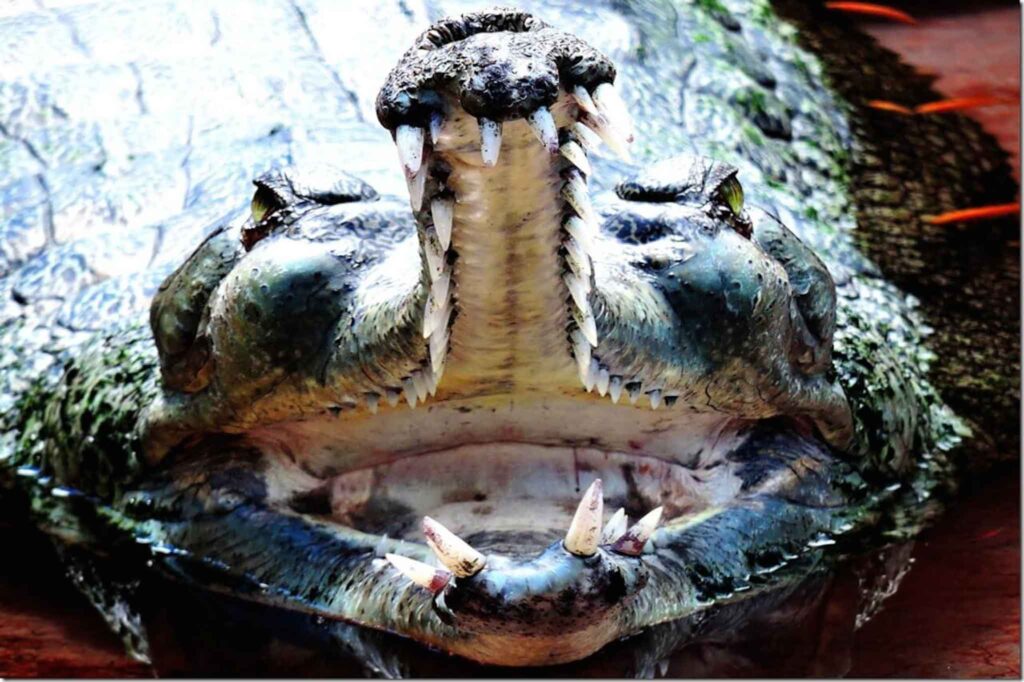
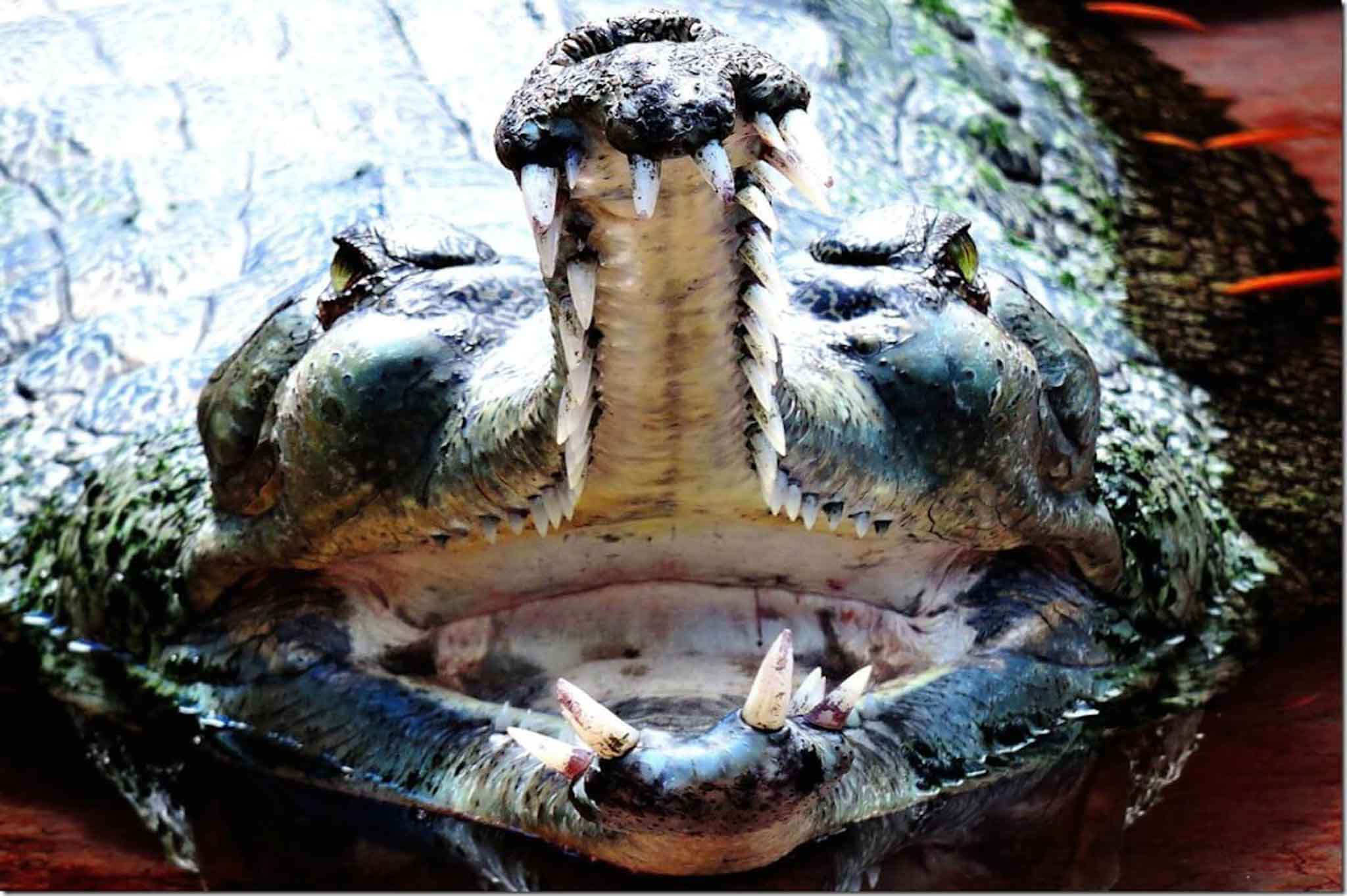
Gharials are found in Himalayan-fed river systems: Indus, Ganges, Brahmaputra rivers, to the coast of Burma, Northern and eastern India, Nepal, Bangladesh and Pakistan. The Gharia is uniformly dark olive-gray with a pale yellow belly. Gharials have an extremely elongated snout. The teeth are needle-like and the eyes green frosted with back. A large male can reach 23 feet in length, and a female 15 feet.
About
- Kingdom: Animalia
- Phylum: Chordata
- Class: Reptilia
- Order: Crocodilia
Distribution
Gharials are found in Himalayan-fed river systems: Indus, Ganges, Brahmaputra rivers, to the coast of Burma, Northern and eastern India, Nepal, Bangladesh and Pakistan.
They favor deep, fast-flowing rivers with relatively clear water, high banks, deep pools, and sandbanks for basking and nesting. They rarely venture more than a few feet away from the water.
Physical Characteristics
The Gharial, Gavialis gangeticus is uniformly dark olive-gray with a pale yellow belly. Juveniles have dark spots and cross bands against a light background. Gharials have an extremely elongated snout. The teeth are needle-like and the eyes green frosted with back. A large male can reach 23 feet in length, and a female 15 feet.
Gharials, being the most aquatic of all crocodilians, are awkward out of water mainly due to their short stumpy legs.
The adult male develops a pot-like structure on the end of the snout, giving the gharial its name (from “ghara” — Hindi for earthen pot). This nose knob is used to produce a bussing noise that repels rival males and serves as an audible warning system.
Behavior
The giant tortoise leads a generally peaceful, lazy life. He wakes up between 7:00 and 8:00 in the morning and basks in the sun as his bulky body warms. The rest of the day he spends grazing and browsing. The tortoise retires at 4 or 5 in the afternoon, spending the cool night half submerged in mud or water or burrowed into dense brush. This keeps the tortoise warm and the conserved body heat probably aids digestion.
Tortoises have symbiotic relationships with other animals, such as between the tortoise and the finch. The tortoise will extend its neck to allow the finch to pick off ticks.
Diet
Gharials are mainly fish eater, although they also take shrimps, crabs, frogs, snakes, birds and small mammals. The flattened snout is very efficient when sweeping and snapping sideways in the water at prey such as fish.
Reproduction & Growth
Gharials live in harems of 4 to 6 females to one male. Males become sexually mature at 10 years, females at 11. Mating usually takes place in November or December.
In March, the female builds several nests, flask-shaped holes, on sandbanks above the flood level. In April, the female lays 15 to 60 eggs in the nests and covers them with soil. Eggs are about 3 1/2 inches long, with hard, calcified shells. The female stays close to the nests, driving away predators. Incubation is 60 to 80 days.
In July, the hatchlings poke a hole in the eggshell with their snouts. The female excavates the nest at hatching time and may carry hatchlings to water in her gular pouch. Hatchlings are 16 inches long.
Notes on Conservation
Gharials have been pushed to the brink of extinction. In 1974, the government of India and the United nations Food and Agriculture Organization conducted a survey of its population in India. It was estimated that no more than 50 to 60 surviving adults.
Although the gharial is still listed as endangered, effective conservation measures have now made the gharial’s future more promising. Massive sanctuaries have been created and active management involves the collection of eggs for hatchery incubation.