Get to Know the Fennec Fox
These small foxes live in family groups of sometimes up to 10 individuals. These groups are often led by the parents and will sometimes share massive dens with other families.
Fennec Foxes show abundant play behavior and communicate with a complex collection of barks, yips, and growls. Despite this sociable nature, they prefer to hunt alone and are nocturnal. At the Honolulu Zoo, our Fennec Foxes will stay ‘up late’ enough into the late mornings, before settling down to sleep the day away.
Physical Characteristics
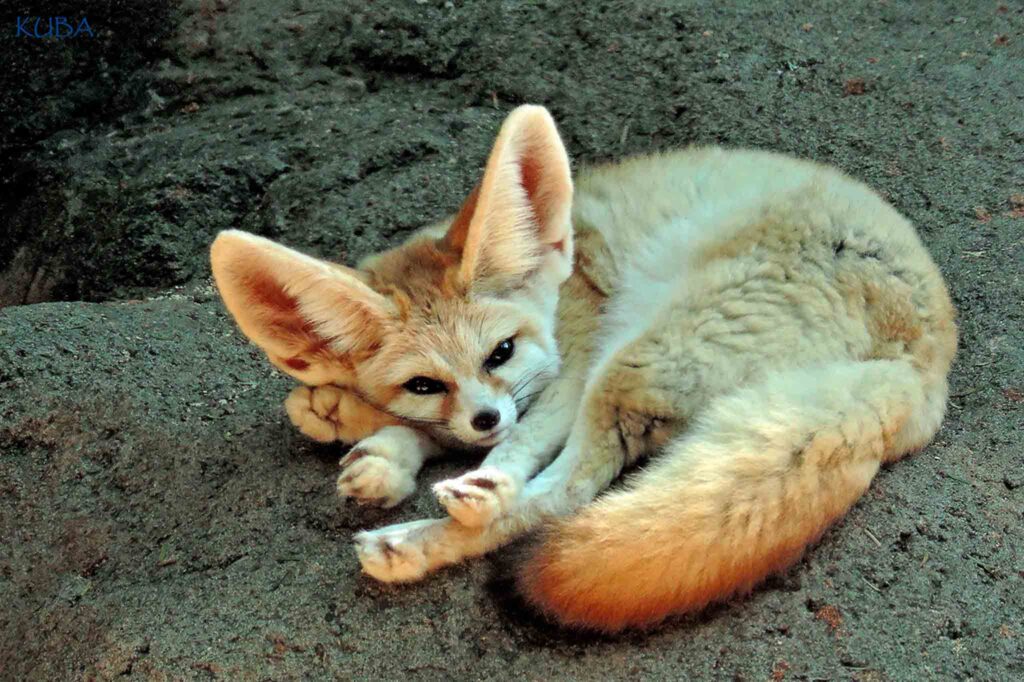
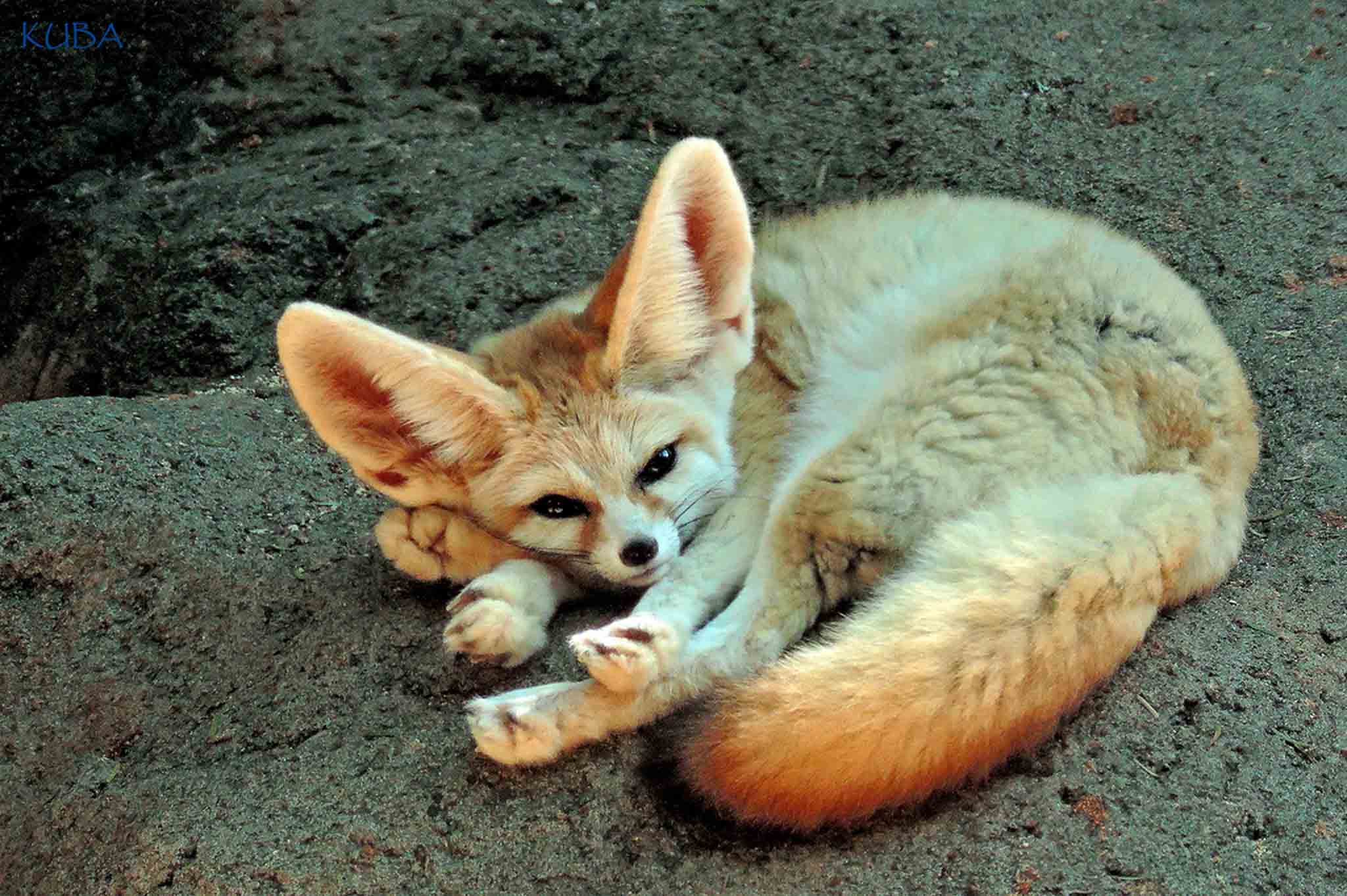
The Fennec Fox is the smallest of the known fox species, and also possesses the largest ears of any fox. Both of these adaptations allow it to avoid overheating in hot desert environments. Another useful adaption are fur-covered paw pads to protect them against burning sand. Their coats are light and sandy in color, are thick and soft.
Diet
Fennecs are omnivores and will take whatever is available. In the wild, they regularly prey on birds, eggs, invertebrates, and other small animals. Extra food is sometimes hidden away for later. Much, if not all of their water is collected from eating fruits and roots of plants. At the Honolulu Zoo, some of our foxes are very fond of blueberries, and they enjoy live mealworms as treats during their training sessions.
Reproduction & Growth
Fennec Foxes mate for life and sometimes adult offspring will remain with the family to help raise younger siblings. Females are only in heat for several days between January and February.
Behavior
These small foxes live in family groups of sometimes up to 10 individuals. These groups are often led by the parents and will sometimes share massive dens with other families. Fennec Foxes show abundant play behavior and communicate with a complex collection of barks, yips, and growls. Despite this sociable nature, they prefer to hunt alone and are nocturnal. At the Honolulu Zoo, our Fennec Foxes will stay ‘up late’ enough into the late mornings, before settling down to sleep the day away.
Distribution
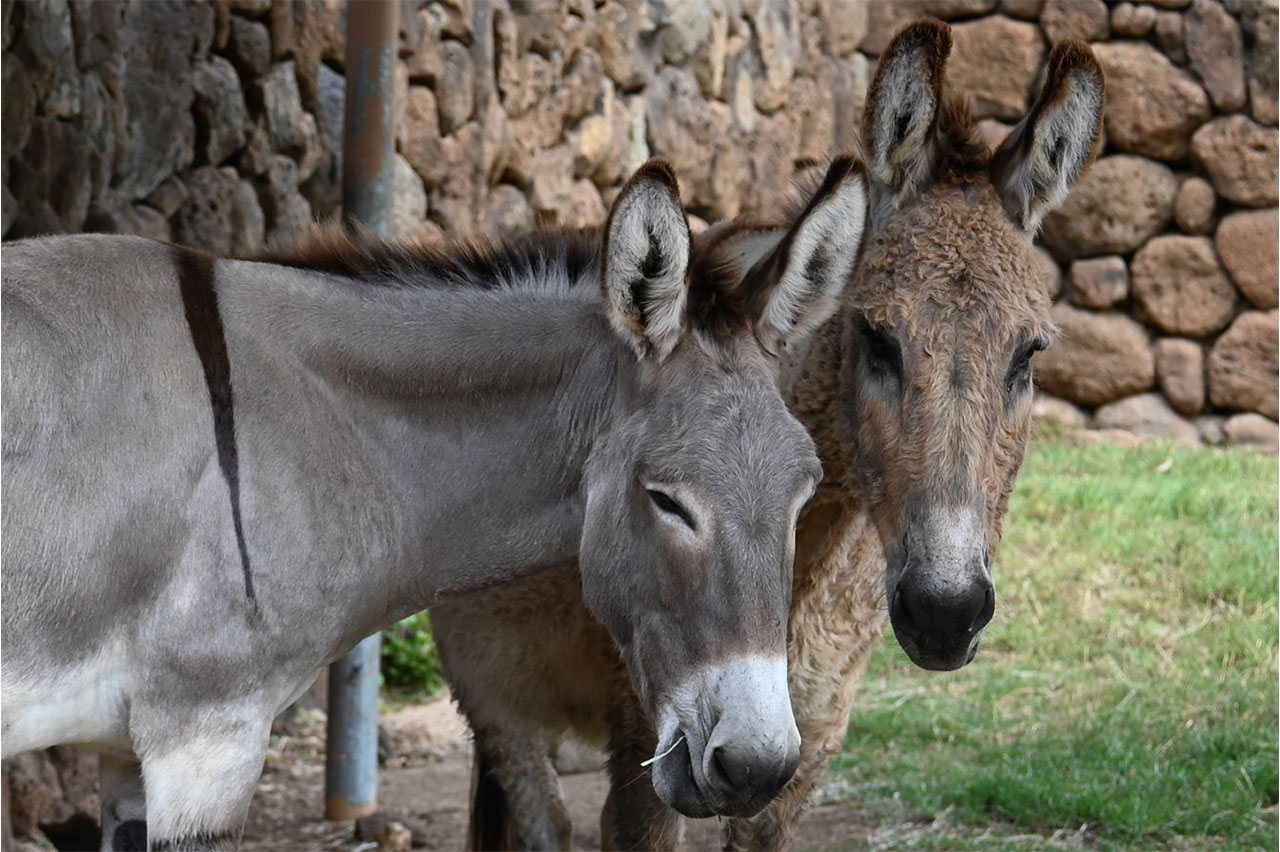
The true wild ass is found only in northern Africa. They have been domesticated for centuries, and it is generally accepted that asses, or donkeys, were domesticated on the shores of the Mediterranean Sea. From there they found their way east and later, to all parts of the world. The Donkey is essentially a southern animal partial to hot and dry climates. The majority of donkeys in Hawaii are found on desert regions of the chain’s largest island, where they were originally imported to work on coffee farms.
Notes on Conservation
The Fennec Fox enjoys a wide range with stable populations, so it is listed as a species of Least Concern by the IUCN Red List. Some wild individuals are collected for the pet trade, but the Honolulu Zoo cautions against keeping animals directly from the wild, as they are untrusting of humans, and their nocturnal habits make for poor companions.
At the Honolulu Zoo
The Honolulu Zoo is home to a mated pair of Fennec Foxes (Moana and Aukai) and their adult son, Vitea.
Citations
Vulpes zerda . (n.d.). Retrieved January 13, 2017, from http://www.iucnredlist.org/details/41588/0
Adams, R. (n.d.). Vulpes zerda (fennec). Retrieved January 13, 2017, from http://animaldiversity.org/accounts/Vulpes_zerda/