Get to Know the Aldabra Tortoise
Scientific Name: Aldabrachelys gigantea
Fun Facts:
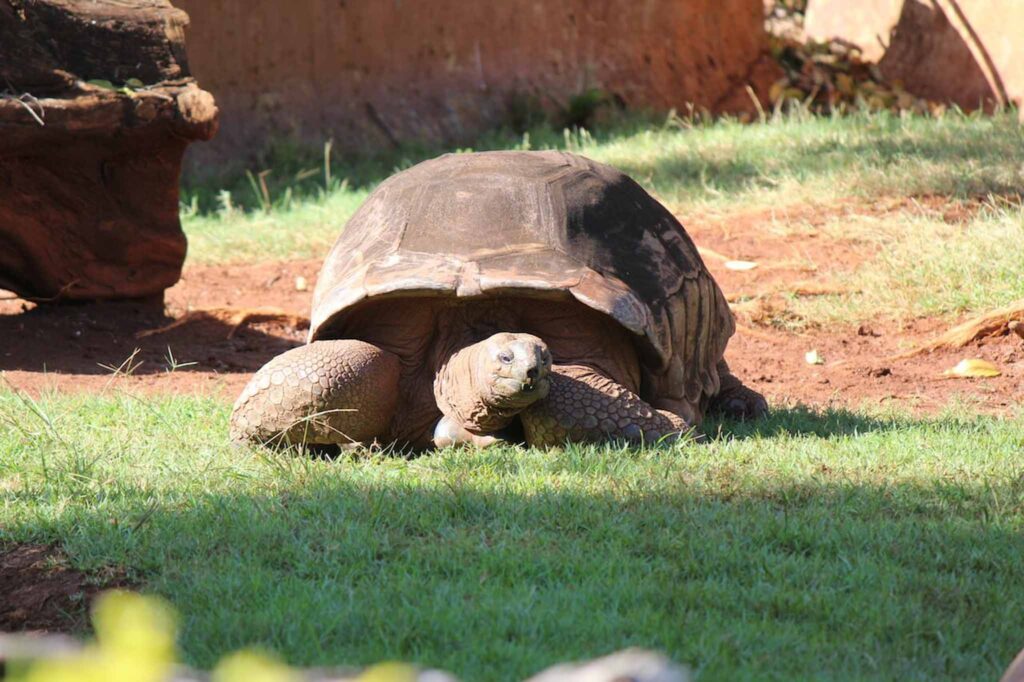
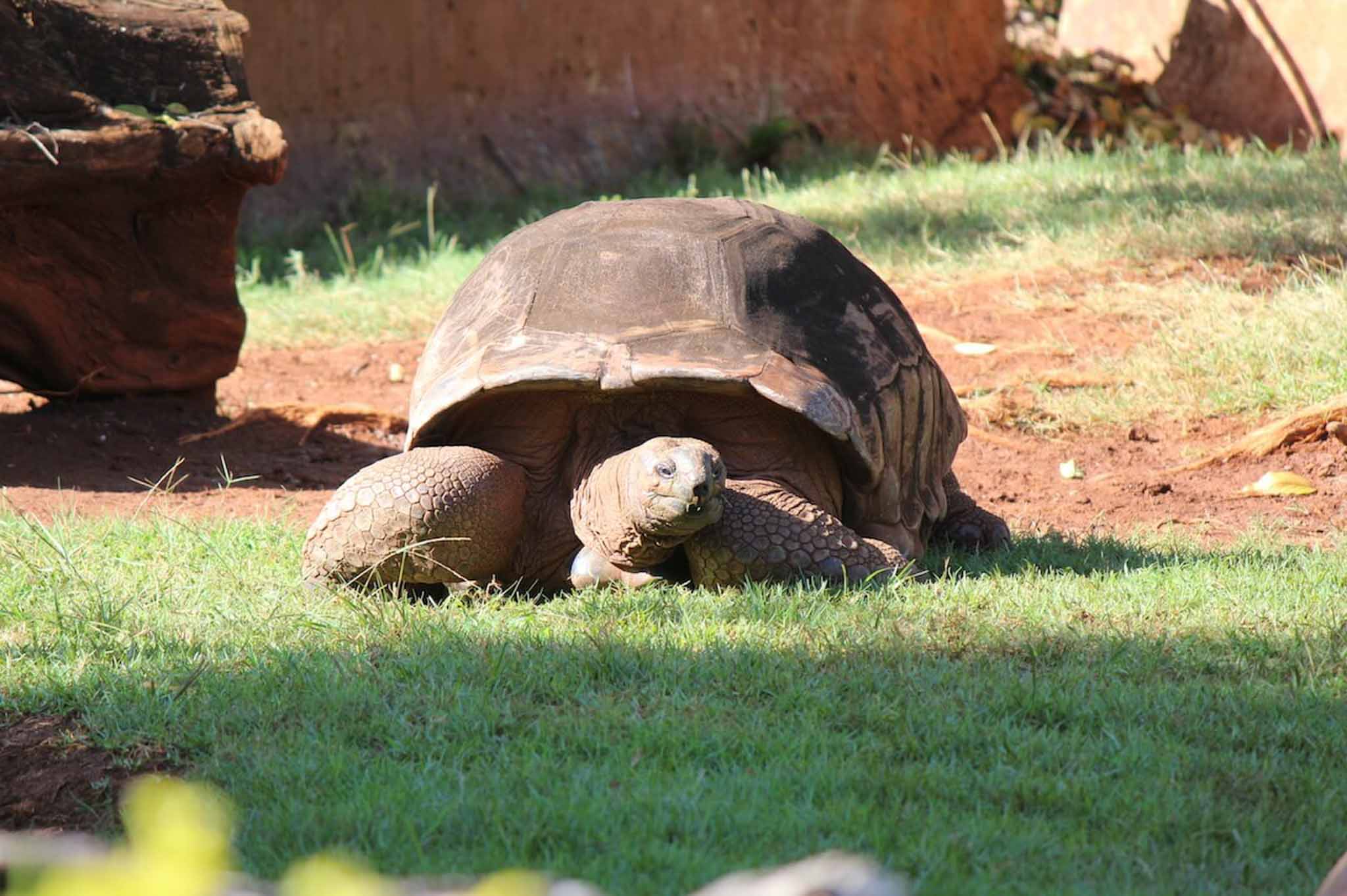
One of the largest tortoises in the world.
Little fresh water is available for drinking in the tortoises’ natural habitat, so they obtain most of their moisture from their food.
The Aldabra giant tortoise, from the islands of the Aldabra Atoll in the Seychelles, is one of the largest tortoises in the world. Historically, giant tortoises were on many of the western Indian Ocean islands, as well as Madagascar, and the fossil record indicates giant tortoises once occurred on every continent and many islands with the exception of Australia and Antarctica.
About
- Kingdom: Animalia
- Phylum: Chordata
- Class: Sauropsida
- Order: Testudines
Physical Characteristics
Pointed snout, flap-like ridge preventing flooding of olfactory area.
Males to 42 inches (105 cm) straight carapace length and over 550 pounds (250 kg). Females to 34 inches (87 cm) and 367 pounds (167 kg).
Diet
Primarily herbivorous, but also eat crab, carrion, and carcasses of dead tortoises. Mainly graze, but also browse to about 1 meter. During the rainy season (May to October), dead leaves and grasses make up the bulk of their diet. A high fiber diet in captivity is essential to produce firm stools.
Distribution
Aldabra Atoll in the Seychelles, introduced populations on Seychelles islands of Fregate, Cousin, Mahe, and Curieuse. Large herds frequent open grass swards with trees and shrubs. Individuals also live in scrubland and mangrove swamps. Area contains “tortoise turf”–a complex of 21 grass, sedge, and herb species, more than half of which are genetically dwarfed.
Breeding
February to May.
Nesting
June to September. 4 to 14 eggs are laid, possibly in multiple clutches.