
Get to Know the Radiated Tortoise
Scientific Name: Astrochelys radiata
Fun Facts:
- As grazing makes up 80-90% of their diet, these tortoises are most often seen wandering around in search of food.
As reptiles, they take full advantage of the sun to warm up in the mornings, and seek shade to keep cool when temperatures rise.
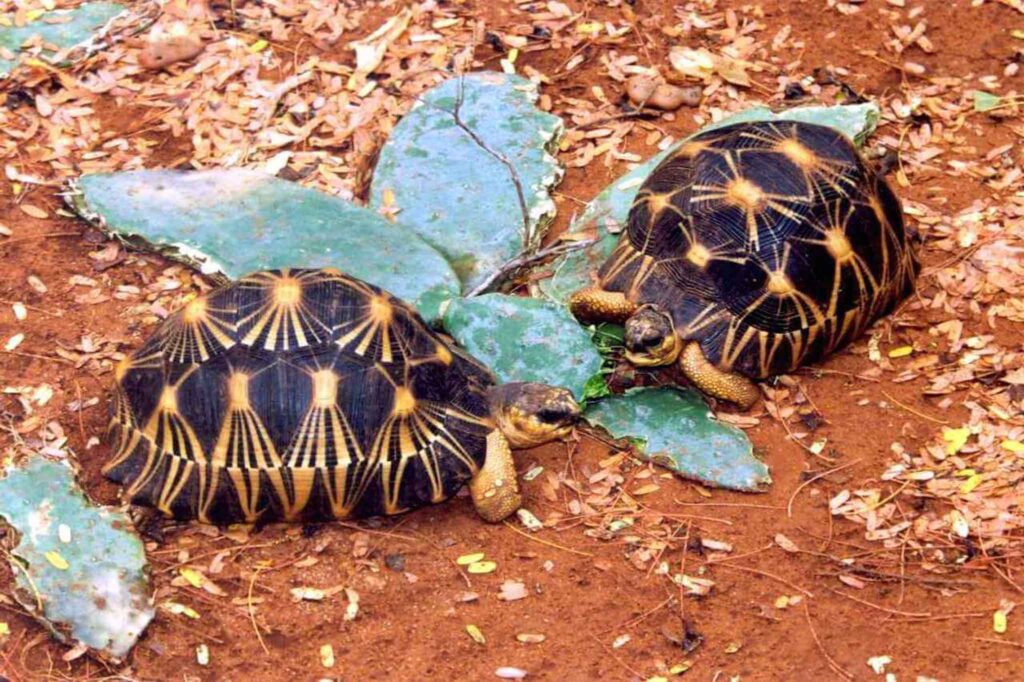
These animals have the standard tortoise build of thick, stocky legs, a domed shell, and a blunt snout. What sets them apart however, are the beautiful star patterns on their shells. Starting from the center of each black shell plate, multiple lines of gold-yellow radiate outwards to make a starburst pattern, earning the Radiated Tortoise not only its name, but its reputation as one of the most beautiful tortoises in the world.
About
- Kingdom: Animalia
- Phylum: Chordata
- Class: Sauropsida
- Order: Testudines
Physical Characteristics
These animals have the standard tortoise build of thick, stocky legs, a domed shell, and a blunt snout. What sets them apart however, are the beautiful star patterns on their shells. Starting from the center of each black shell plate, multiple lines of gold-yellow radiate outwards to make a starburst pattern, earning the Radiated Tortoise not only its name, but its reputation as one of the most beautiful tortoises in the world.
Distribution
In the wild, this reptile is relegated to the extreme south and south-western portions of Madagascar. In recent times, they have also been introduced to the nearby island of Reunion.
Behavior
As grazing makes up 80-90% of their diet, these tortoises are most often seen wandering around in search of food. As reptiles, they take full advantage of the sun to warm up in the mornings, and seek shade to keep cool when temperatures rise.
Diet
Radiated Tortoises are herbivores and feed primarily on grasses, succulents, and fruit. A particular favorite for wild tortoises is the Opuntia plant.
Reproduction & Growth
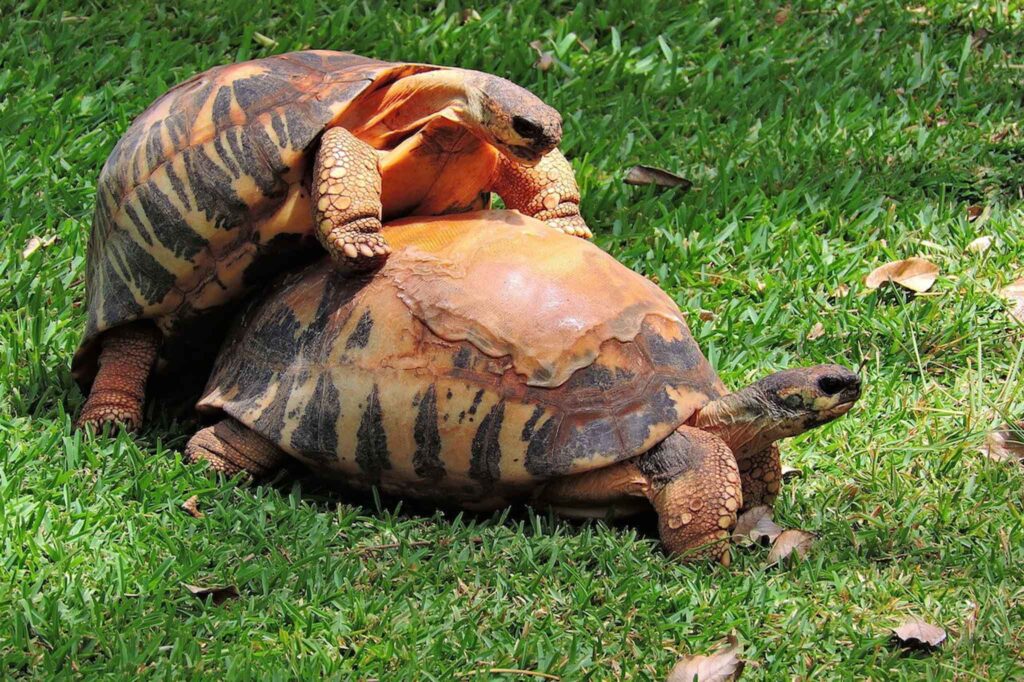
Males do not reach maturity until they are a foot in length and females must grow even larger. To signal their intent, males will often call and bob their heads to get the female’s attention.
After mating, females dig holes 6-8 inches deep and lay anywhere from 3-12 eggs. After 145 to 231 days, the eggs hatch. Hatchlings are white or off-white in color with more flat shells that take on their domed shape soon after hatching.
Notes on Conservation
Radiated Tortoises are Critically Endangered. Their limited range, combined with a slow reproductive rate, has left them especially vulnerable to habitat loss and overharvest for both food and the exotic pet trade.
At the Honolulu Zoo
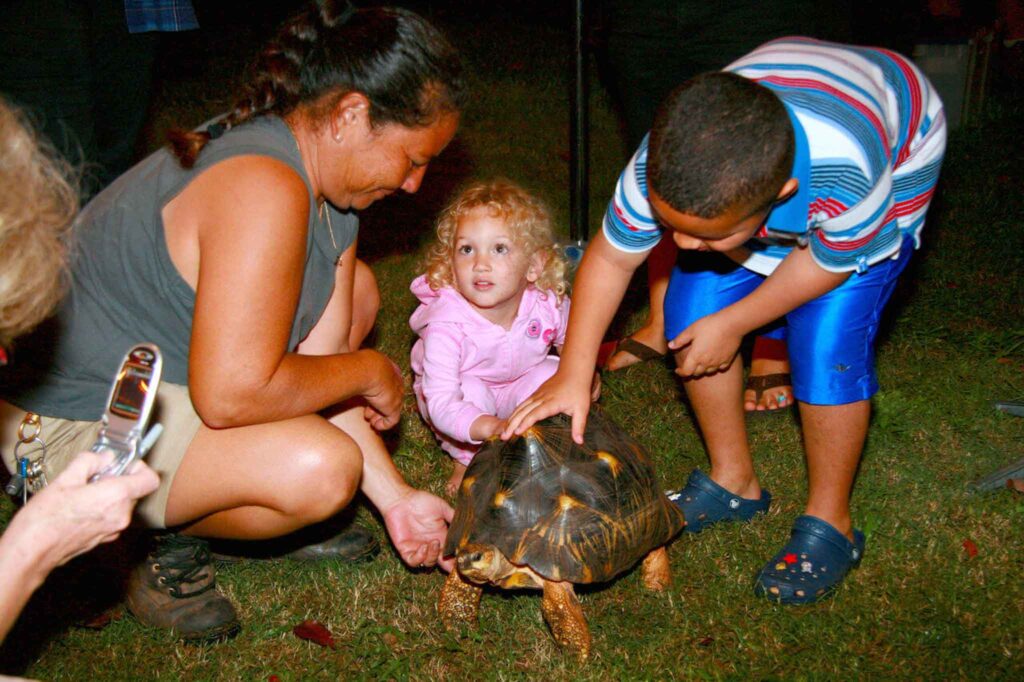
Our Radiated Tortoise population currently consists of six males, two females, and a single juvenile. The Honolulu Zoo is proud to successfully breed these tortoises in captivity as part of an international effort to conserve and one day, reintroduce this species.
Citations
http://animaldiversity.org/accounts/Astrochelys_radiata/
http://www.iucnredlist.org/details/9014/0