Get to Know the Bongo
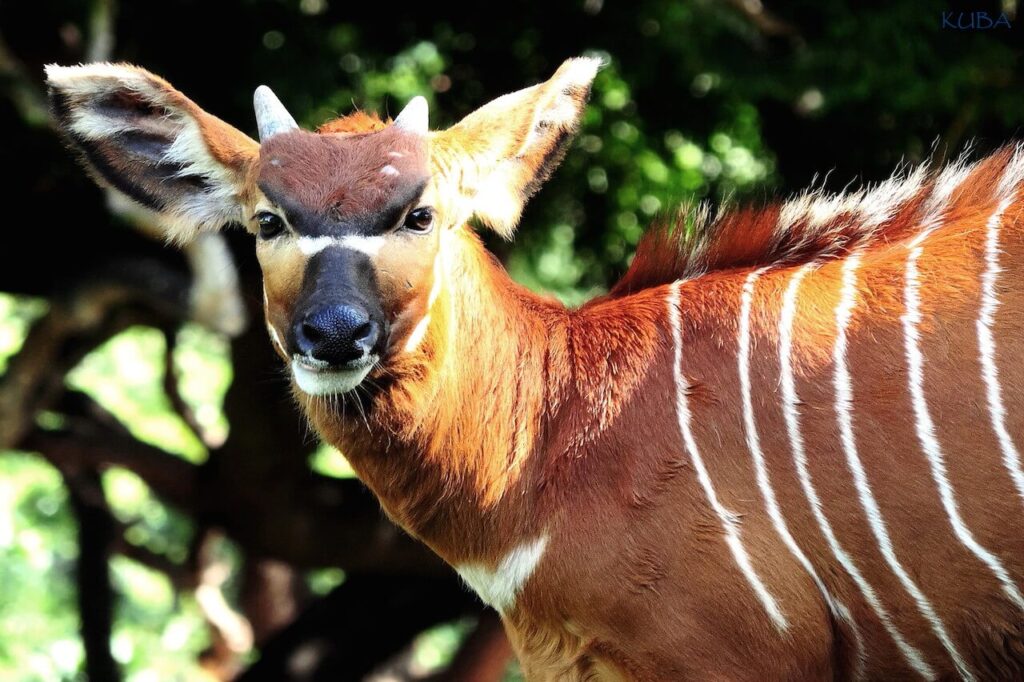
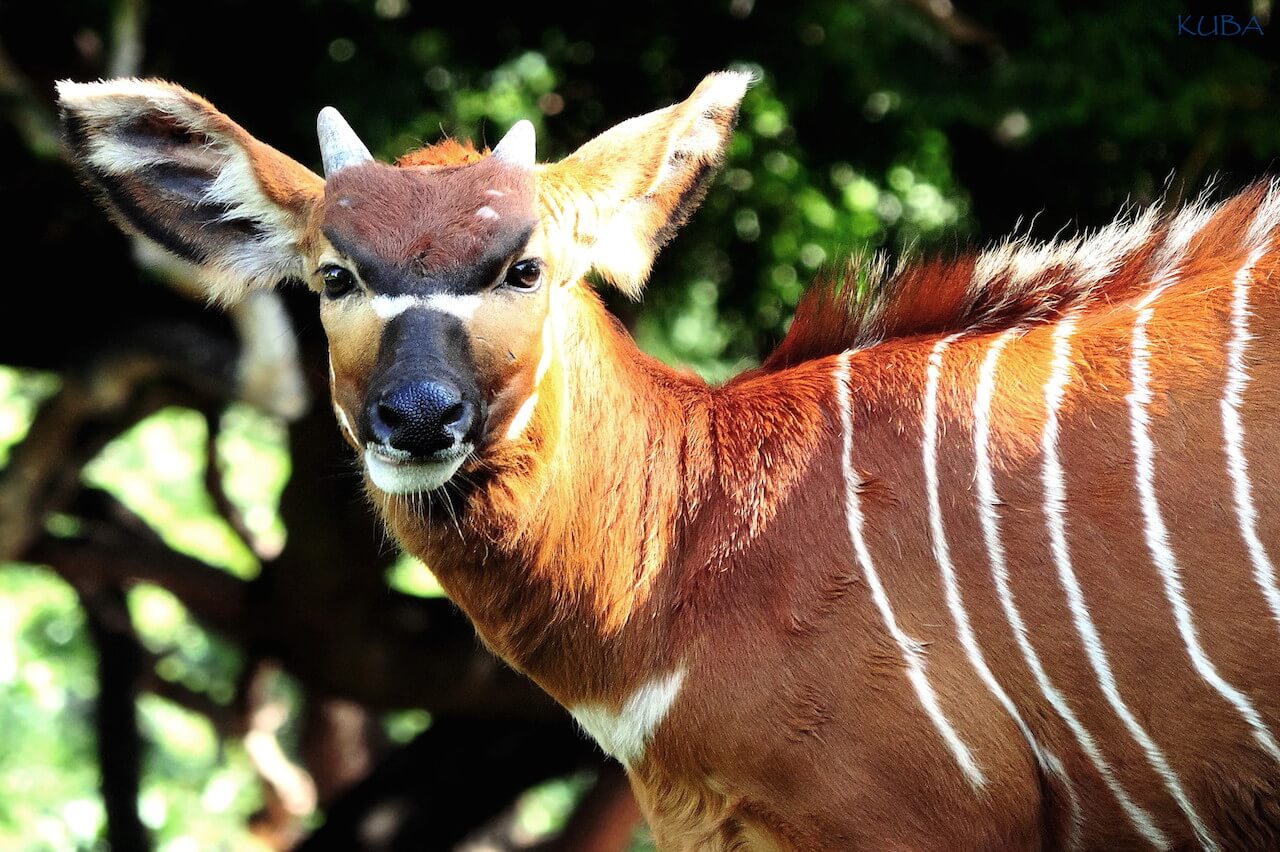
Bongo are some of the largest antelope species alive, with females averaging 500 pounds and males almost 900. Both genders sport a rich chestnut coat that darkens with age in the males, as well as 10-15 vertical stripes on their torso. The horns on males grow larger and wider than the females.
When running, they will line their horns parallel to the backs of the necks to avoid entangling them in branches. Vulnerable newborns are left to hide still in tall grass to avoid predators, and the mother returns regularly to nurse them.
About
Scientific Name: Tragelaphus eurycerus
Kingdom: Animalia
Phylum: Chordata
Class: Mammalia
Order: Artiodactyla
Physical Characteristics
Bongo are some of the largest antelope species alive, with females averaging 500 pounds and males almost 900. Both genders sport a rich chestnut coat that darkens with age in the males, as well as 10-15 vertical stripes on their torso. The horns on males grow larger and wider than the females.
Diet
Bongos are herbivores, and enjoy a diet of leaves, shoots, and grasses. At the zoo they are given browse, along with hay, vitamin pellets, and treats of fruits and vegetables.
Distribution
Two subspecies of Bongo exist: one in Central Africa, and the other on the southern portion of Western Africa. Both are primarily forest dwelling, and favor dense jungles.
Behavior
Bongo are most active at dawn and dusk, and often forage near the edges of wooded areas. They normally shy in the wild and flee into the forest for cover at the slightest provocation. When running, they will line their horns parallel to the backs of the necks to avoid entangling them in branches.
Reproduction & Growth
A single calf is born after a period of 9 months, and mothers nurse their young for half a year. Vulnerable newborns are left to hide still in tall grass to avoid predators, and the mother returns regularly to nurse them. At 20 months old, the Bongo reaches maturity and in captivity, they have an approximate lifespan of 19 years.
Notes on Conservation
Both subspecies of Bongo are on the decline, with the Western/Lowland Bongo being considered Near Threatened, and the Eastern/Mountain Bongo to be Critically Endangered. Their primary threats include habitat fragmentation, as well as overhunting by humans for bushmeat and trophies.
At the Honolulu Zoo
Our Bongos, Cory and Topenga. They share the Watering Hole exhibit with the Zoo’s storks, Crowned Cranes, Sacred Ibis, and Louis the Pelican.
Citations
Tragelaphus eurycerus . (n.d.). Retrieved January 12, 2017, from http://www.iucnredlist.org/details/22047/0