
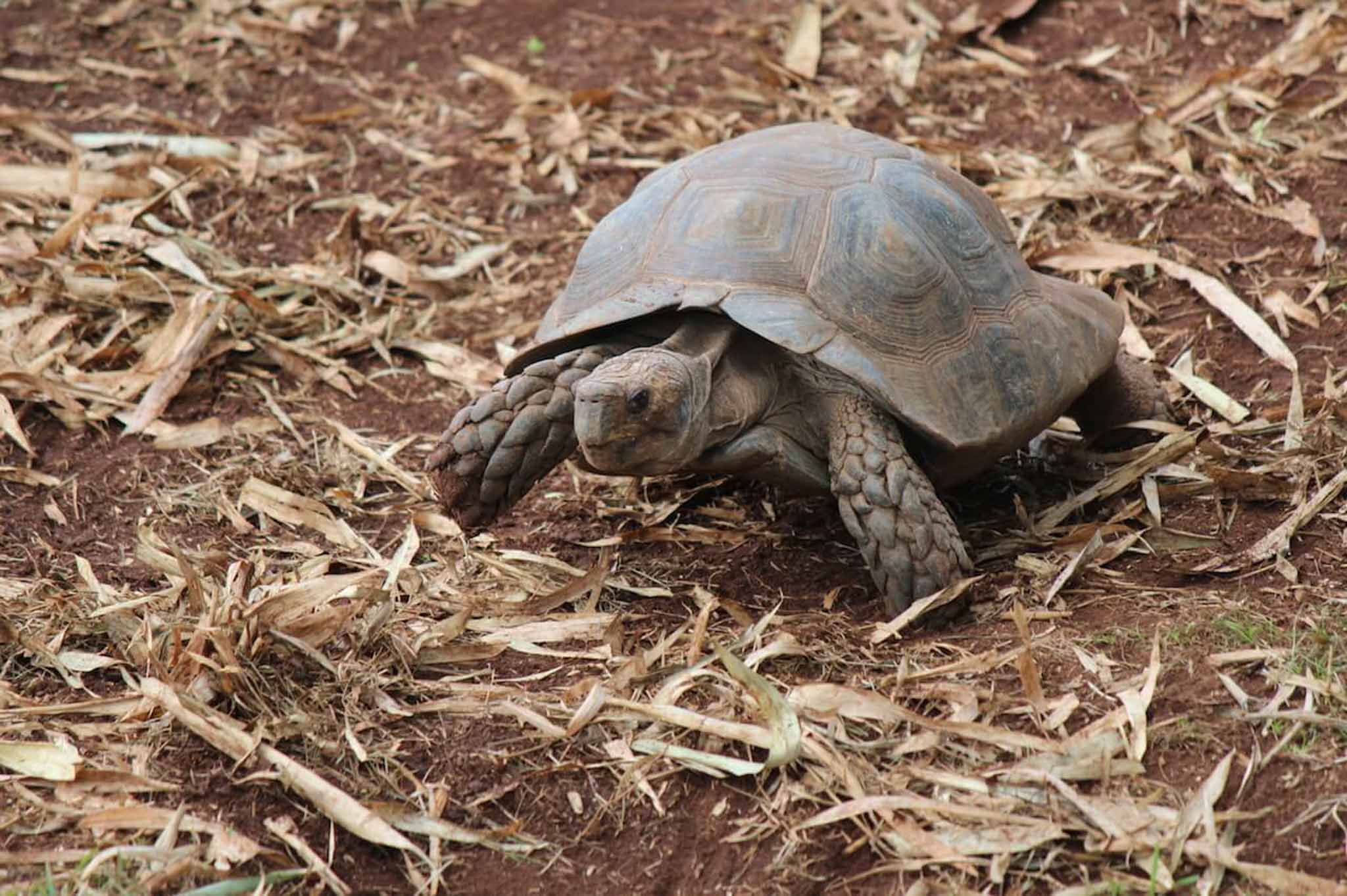
Get to Know the Asian Brown Tortoise
Scientific Name: Manouria emys
Fun Facts:
The species is most active during twilight, or during the day if the temperature is not too high.
Males engage in vocal disputes and shoving matches to discourage rivals from courting nearby females.
This is the largest tortoise species on the Asian continent and quite possibly the oldest tortoise species in the world, having changed very little over millions of years.
About
- Kingdom: Animalia
- Phylum: Chordata
- Class: Sauropsida
- Order: Testudines
Physical Characteristics
This is the largest tortoise species on the Asian continent and quite possibly the oldest tortoise species in the world, having changed very little over millions of years. They are able to reach a size of about two feet long, and can weigh almost 85 pounds! As their name implies, they are mostly brown in color.
Diet
Fruits, grasses, leaves, and other vegetation. Occasional protein.
Distribution
This tortoise may be found in the forests and grasslands of Bangladesh; India; Indonesia; Malaysia; Myanmar; Thailand and Viet Nam.
Reproduction & Growth
The Asian Brown Tortoise can lay up to 51 eggs a a time, which is more than most tortoise species. Eggs incubate for 66-71 days, which is shorter than most tortoises. The young hatch with their yolk sacs almost completely absorbed. Hatchlings can range from dull brown to black.
At the Honolulu Zoo
The Honolulu Zoo was the first zoo in the world to breed these animals in 1978. In total, 159 of these animals have been born at the zoo and our animals continue to breed successfully.
Behavior
Brown Tortoises, provided they have enough personal space, are sociable and often interact through head-bobbing displays, and growls. Like all reptiles, they enjoy basking in natural sunlight to warm up, especially in the mornings. To cool off, they seek shade or a mud wallow. Some will even dig burrows.
Females have been observed building above-ground mound nests—a unique trait among tortoises. They are also dutiful mothers that gather fresh nest material to build up the mounds until their strict standards have been met. Afterwards, females will continue to monitor the nest for temperature and make modifications as needed. They will also defend their nests for up to 20 days, even from larger predators. When approached, mothers will elevate themselves off the ground and hiss a warning. If the warning is not headed, biting and shoving ensue.
Citations
https://www.tortoise.org/archives/manouria.html


