Get to Know the African Helmeted Turtle
Common Name: African Helmeted Turtle
Scientific Name: Pelomedusa subrufa subrufa
Family: Pelomedusidae
Order: Testudines
Class: Reptilia
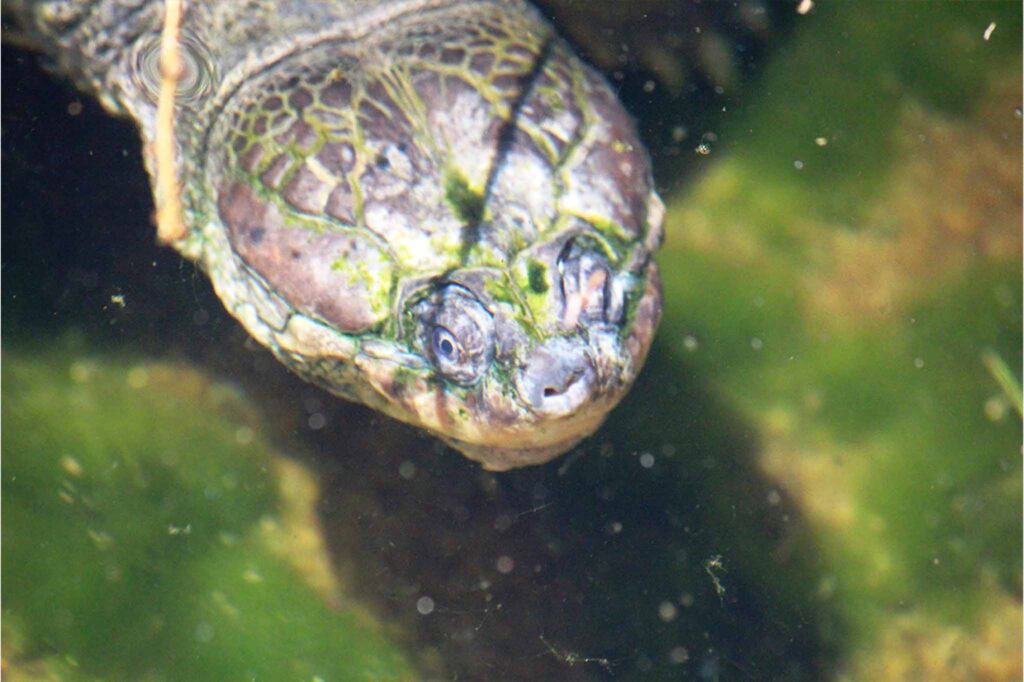
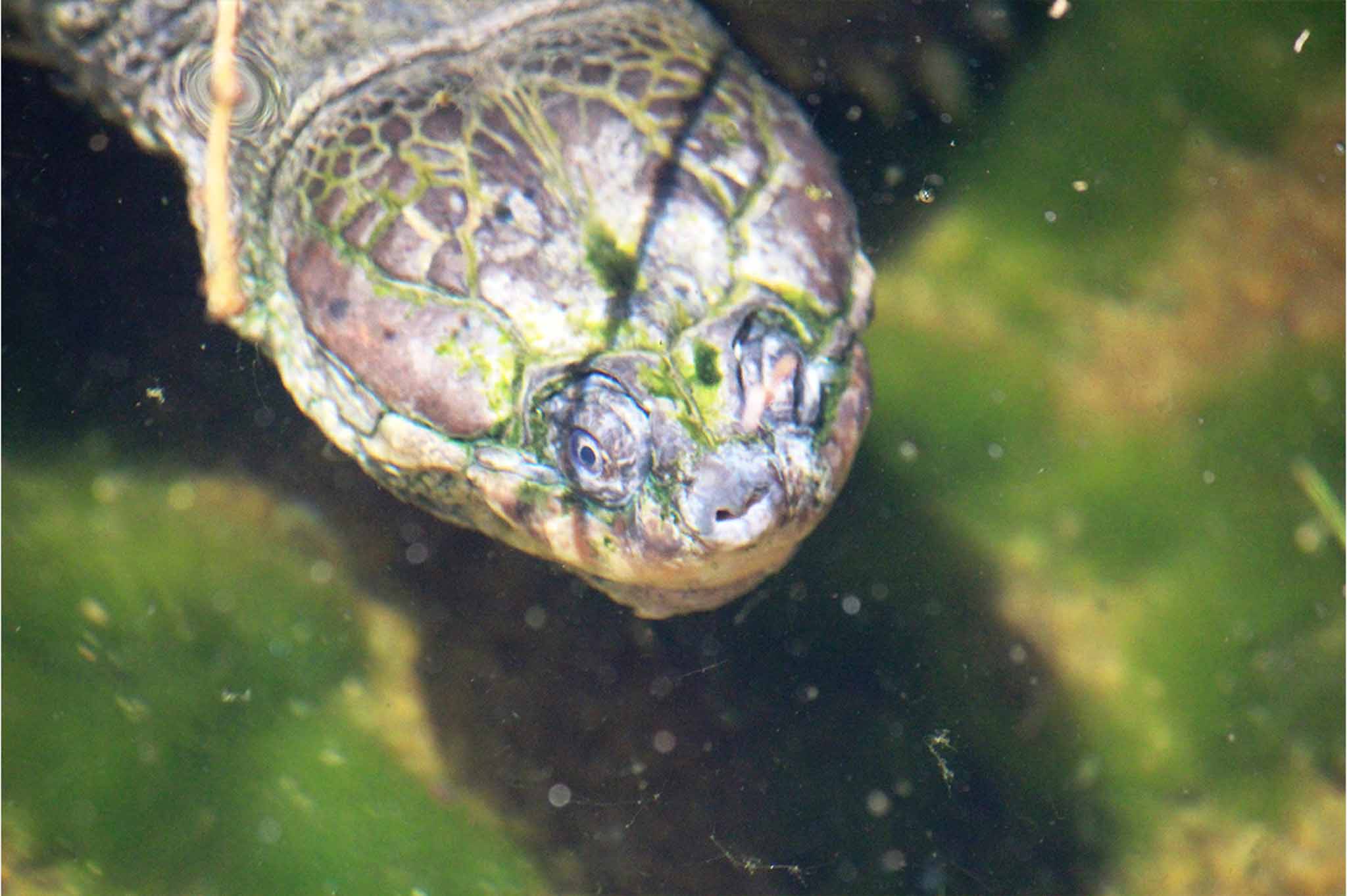
The African Helmeted Turtle is a relatively small turtle with a shell length of 15-18 cm (6 to 7) as an adult. The shell is very thin, oval shaped, and brown to olive in color. The head is brown to olive colored and may be mottled with darker or lighter tones. The tops of the tail and limbs are a grayish brown, while the underside is yellowish. The male turtle is distinguished by its long, thick tail.
Physical Characteristics
The African Helmeted Turtle is a relatively small turtle with a shell length of 15-18 cm (6 to 7) as an adult. The shell is very thin, oval shaped, and brown to olive in color. The head is brown to olive colored and may be mottled with darker or lighter tones. The tops of the tail and limbs are a grayish brown, while the underside is yellowish. The male turtle is distinguished by its long, thick tail. Females tend to have a shorter tail and a broader carapace. Hatchlings have a shell size of about 30mm ( 1 ) in length, and are olive to black in color.
Diet
It has a carnivorous diet, feeding on a variety of insects, small crustaceans, fish, earthworms and snails. In large groups they will drown and eat small aquatic birds, mammals, reptiles and amphibians.
Distribution
Pelomedusa subrufa is found throughout Africa, as far west as Ghana, and south all the way to the Cape of Africa. It has also been recorded in parts of Madagascar, and is undistinguishable from those in east Africa. Pelomedusa subrufa has a subspecies olivacea, found in northern Africa ranging from Ethiopia westward to Nigeria and the Cameroons. They are semi-aquatic animals, living in marshes, creeks and rain holes. During the dry season, they will bury themselves in the bottoms of mud pools and estivate until the next rainy season, where they travel from mud hole to mud hole, distributing themselves widely.
Reproduction & Growth
In spring, during courtship, the male will follow the female and extend his head touching her hindquarters and vent. If she is non-responsive he will nip and snap at her legs and tail. After mounting her carapace, he extends his head over hers swaying it in front of her face while expelling water from his nose.
The female will lay 13 to 16 eggs on average, normally during late spring and early summer. The eggs are covered with slime when laid, and placed in a flask shaped nest that is about 10 to 17 cm (approximately 4 – 7) deep. The eggs hatch in 75- 90 days.
Behavior
When eating and courting, the relatively small African Helmeted Turtle becomes quite aggressive. During feeding, it will seize its prey in its mouth and tear it to shreds with its forefoot claws. Where populations are dense, and competition for food becomes heightened, several turtles may attack larger prey together, and drag it underwater before tearing it apart. The African Helmeted Turtle often basks midday in temperate climates where the sun is not too not. When captured, helmeted turtles will emit an offensive musky odor, but soon tame and are kept well in captivity or as pets.
Suggested Reading
Ernst, Carl H. & Barbour, Roger W. Turtles of the World. Washington D.C.: Smithsonian Institution Press, 1989.
Obst, Fritz Jrgen. Turtles, Tortoises and Terrapins. New York, NY: St. Martins Press, 1986.
Altenburg, Ruud. ETI – Turtles of the World: Pelomedusa subrufa example. Retrieved on 6 Mar 2003 from <http://www.eti.uva.nl/Turtles/turtles3a.html>
Helmeted Turtle. Retrieved on 6 March 2003 from <http://www.americazoo.com/goto/index/reptiles/101.htm>